THE ALTERNATIVE ENERGY BLOG


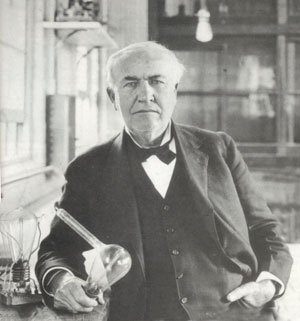
Not only will atomic power be released, but someday we will harness the rise and fall of the tides and imprison the rays of the sun. Thomas A. Edison
FUEL CELL, GEO-THERMAL, HYDRO-ELECTRIC, SOLAR, WIND... OUR PROSPERITY AND INDEPENDENCE DEPEND UPON OUR ABILITY AND WILLINGNESS TO REPLACE FOSSIL FUELS WITH CLEAN, RENEWABLE SOURCES OF ENERGY.


Friday, March 25, 2011

NASA plans sun-energy project on Wallops Island, VA

I grew up farming. Cultivating land gives you a unique appreciation for the lowly acre. According to word-origins.com, the term “acre” is “from the Old English æcer, which as early as 1000 A.D. had come to be used for referring to a particular measured area of agricultural land (as much as a pair of oxen could plow in one day).” Modern agriculture has vastly expanded the amount of ground a farmer can till. My father and I could cover an 80 acre plot of ground in one day.

So what does that mean to alternative energy?

The Virginian-Pilot reports:

“NASA announced plans Thursday to develop a solar-energy facility that would meet part of the energy needs at its Wallops Island Flight Facility. The project, to be built in stages, would have as many as 80 acres of solar panels.” http://hamptonroads.com/2011/03/nasa-plans-sunenergy-project-eastern-shore

Let me give you some perspective. A section is one square mile or 640 acres. A quarter section is therefore 160 acres, or ½ mile x ½ mile. Half of that (80 acres) forms a rectangle of ¼ mile x ½ mile, a significant amount of space.

The entire project, when completed, will supply energy equivalent to the needs of 850 homes. According to hypertextbook.com (http://hypertextbook.com/facts/2003/BoiLu.shtml ), the average power consumption per home is 8,900 kW/hrs per year. A little arithmetic reveals that over a one-year period, 7,565,000 kW/hrs (7,565 MW/hrs) will be generated. That breaks down to 630.4 MW/hrs each month.

The full text of the article follows:

NASA plans sun-energy project on Eastern Shore
By Tom Shean
The Virginian-Pilot
© March 25, 2011
EASTERN SHORE

NASA announced plans Thursday to develop a solar-energy facility that would meet part of the energy needs at its Wallops Island Flight Facility. The project, to be built in stages, would have as many as 80 acres of solar panels.

As part of its alternative-energy project at Wallops Island, it also plans to install two residential-scale wind turbines capable of generating 2.4 kilowatts, NASA said. One turbine would be built near the NASA visitor center and one near the entrance gate and security-guard station at the Eastern Shore facility.

NASA said it expects the electricity output to alleviate rising utility costs at its Wallops Island facility and enable the agency to meet energy-conservation requirements imposed by the Federal Energy Policy Act. When complete, the project would generate enough electricity to supply about 850 typical American homes, it said.

NASA said its alternative-energy plan for Wallops Island no longer calls for installing the two utility-scale wind turbines that it proposed earlier. These were dropped, it said, because of concerns that agencies and organizations expressed about the potential impact on birds and bats.

Wednesday, March 23, 2011

3M Awarded $4.4M to Develop Ultra Barrier Solar Film


According to the U.S. Department of Energy (DOE), 3M has been awarded $4.4 million by the DOE SunShot Initiative. The purpose of this initiative is to reduce total costs of photovoltaic (PV) installations by 75% in order to be cost-competitive with other sources of energy. Funds will be disbursed to 3M over a 3-year period.

So, what is 3M going to be doing with this money? The company will accelerate development and marketing of their Ultra Barrier Solar Film. During this time, 3M will be working with DOE’s National Renewable Energy Laboratory (NREL) outside Denver, Colorado to demonstrate performance and reliability.

So what is this film used for? The intent is to substitute glass with a flexible film. Why is this important? Well, there are a few difficulties with traditional glass:

- Glass is heavy. Care must be used to prevent overloading of a rooftop installation.
- Glass is rigid and inflexible (reminds me of some people I know).
- Glass-covered PV arrays are limited in their size to make them manageable for transport and installation.

How is Ultra Barrier Film better than glass? According to 3M:

- Ultra Barrier Solar Film requires less installation time.
- It removes the need for metal racking (installed to keep glass PV arrays from overheating and providing the perfect hiding place for your kid’s frisbee).
- By reducing logistics expenditures (logistics… think UPS). It weighs less, is flexible, and therefore less expensive to transport.
- The film allows manufacturers to commercialize large area modules, effectively reducing fixed costs associated with module manufacturing, assembled in a continuous roll-to-roll process.
- An effective film barrier would allow for permanent installation of inexpensive, light-weight PV arrays that are flexible and follow the contours of the surface they are attached to.

The reason that glass is used in the first place is to keep dirt and moisture out while allowing the maximum amount of light to reach the semi-conductor material. 3M claims that Ultra Barrier Solar Film has “high light transmission, superb moisture barrier performance, and excellent weatherability”. Weatherability must include resistance to ultraviolet (UV) rays that are well-known to degrade plastic over time. To be truly effective, a homeowner will expect his or her array to last as long as the mortgage (up to 30 years).

Moisture is troublesome if it gets inside a PV array. The stated performance for Ultra Barrier Solar Film is “moisture vapor transmission rates (MVTR) below 5 * 10-4 g/m2/day”.

OK… so what is that?

10-4 is another way of saying 0.0001, so the amount of vapor transmitted through this film is 0.0005 grams (a gram is about the weight of one paper clip) of water over one square meter (a meter is 3.3 feet) per day. In other words, it would take 10,000 days (27 years and 3 months) for 5 paper clips worth of water to accumulate over a 10 square foot area). That’s pretty dry.

Will the reality match the hype? I’ll let you know in a couple of years when I will be reporting from my local hardware store.

Wednesday, November 10, 2010

N.C. region meets requirements for building wind farms

By Jeff Hampton
The Virginian-Pilot
© November 7, 2010

http://hamptonroads.com/2010/11/nc-region-meets-requirements-building-wind-farms

Camden County, N.C.

Hundreds of wind turbines, each about 400 feet tall, could be coming to at least three farm tracts in northeastern North Carolina - including Hales Lake in Camden County - where the Navy proposes a jet airfield.

Three meteorological towers erected in January near Sandy Road in an area known as the Desert in Pasquotank and Perquimans counties have recorded winds strong enough to make the project viable, said Shelly Cox, director of the Pasquotank County Planning Department. Wind speeds must average 12 to 14 mph.

Depending on year long results that are to conclude in two months, 150 towers producing enough energy to power 75,000 homes could be built, said Craig Poff, senior business developer for Oregon-based Iberdrola Renewables. The company markets itself as a leader in wind power and gas storage.

Poff would not give exact wind data from the meteorological towers but said numbers are good enough that the clean energy company is "moving forward" with the project. Iberdrola Renewables has built 41 wind farms across the United States, according to a company website.

Poff confirmed the company has also set up a "met" tower in Currituck County in the Bull Yard fields in Shawboro and has interest in Hales Lake, a farming area of more than 10,000 acres with several landowners.

More than two years ago, the Navy named a tract in Hales Lake as one of five potential sites for a jet practice runway known as an outlying landing field. Citizen groups and elected officials have opposed the project, hiring attorneys, lobbyists and engineers in an effort to stop the Navy's plans. But locals fear the Navy could move ahead anyway.

Massive wind farms with 400-foot towers could make the difference, said Matt Wood, a Pasquotank County commissioner and a partner in Hales Lake farming property.

"It would not be friendly to an OLF," Wood said.

Property owners, including Wood, have talked with Iberdrola Renewables officials and have visited similar projects in other states, he said. Tall wind towers, even in the Bull Yard, could obstruct an airfield in Hales Lake. The two tracts are separated only by swampy woodlands, Wood said.

Invenergy, a Chicago-based energy company, has also expressed interest in Hales Lake, he said.

Wind-farm projects have run into opposition across the country with complaints of noise, unsightly views and harm to wildlife, such as birds flying into the turbine blades. Possible projects here would be in remote farm fields.

Construction of the Desert project would require 590 workers over 18 months, with a local economic impact of $135 million, said Wayne Harris, director of the Albemarle Economic Development Commission.

It would create about 19 permanent jobs paying more than $100,000 each, he said. Citing a state study, he estimated between 30 and 120 indirect jobs and an ongoing economic increase of $89 million to $108 million.

"This is a lot like any high-tech industry," Harris said. "It provides benefits without so much employment but employment that is high quality."

Iberdrola Renewables increased its wind energy generation in the United States between April and June by nearly 32 percent, according to the company website.

Growth came in part from $577 million in federal grants and a "favorable regulatory environment." Projects must be finished and operating before getting federal grants or tax breaks, Poff said.

Tuesday, November 2, 2010

The U.S. Navy and Biofuels – Part III

(CONSUMER ENERGY REPORT 30 OCT 10) ... Robert Rapier
http://theenergycollective.com/robertrapier/46375/us-navy-and-biofuels-part-iii

This is the concluding installment of my recent interview with Tom Hicks, Deputy Assistant Secretary to the Navy (Energy). Part I discussed the overall goals of the Navy’s biofuel efforts, and in Part II we covered why coal-to-liquids (CTL) is presently off-limits, and why GTL may be as well. Part III picks up with the human cost of moving fuel into the theater of operations.

The editor of Consumer Energy Report, Sam Avro, joined me in this interview and our questions below will be denoted as “RR” or “SA”. Mr. Hicks’ responses are “TH”.

RR: I saw a recent story that once fuel actually makes it to the theater of operations, it can cost $400 per gallon when all the costs are added up. So are you putting any emphasis on producing the fuel locally? For instance, are you funding efforts that could enable you to produce fuel onsite in Afghanistan?

TH: Yes, I can point you to several efforts. In terms of working with say the Afghan population, and looking to them to create alternative fuels; that’s something that the Department of Defense and my understanding is maybe some other federal agencies are working on to create and stimulate those opportunities. And that’s really more their role to do that. What we are looking to do is to make our expeditionary units more efficient and less reliant on fossil fuels, and we are doing that in a number of ways.

One great example of us reducing our fuel tether, if you will, is our experimental forward operating base. This is something that in March the Marine Corps created in Quantico, Virginia – at the Marine Corps Base Quantico; an experimental or mock forward operating base. And the purpose of that was to test a bunch of alternative fuel technologies, renewable energy technologies so that they could reduce the amount of fossil fuels that they use in theater.

And just to give you a sense – and this is based on Army study – but for every 24 fuel convoys that we bring into the theater, we have one casualty. So that’s one soldier, one marine, killed or wounded who is not otherwise fighting the fight or engaged with the local population to build a nation. That’s a big part of what is driving this as well, that there is a human cost to this; a big price to pay and we are very concerned about that. So with that forward operating base, they identified a number of technologies that seem to have a lot of promise, and they further tested those technologies at a war-gaming exercise to see if they could hold up to the rigors of the battlefield.

From there, they took the best ones out of that exercise and trained a Marine Corps brigade that was deployed just over six months after it was initially tested. So those technologies are in theater today, and just six months ago they were just being tested. And that’s all to the point of reducing our dependence on our generator sets which are all using petroleum products, and being able to lighten the load and be more independent; to decrease our dependency on fossil fuels.

SA: When you talk about technology, are you talking about running their energy systems off of solar or things like that? Can you expound upon that?

TH: Yes, that’s a part of it. As well as things like LED lighting in the tents; having shades that serve two purposes; not only making the tents cooler, but they also have PV embedded in them to generate power. Those are a couple of examples. There are some others where we are putting out PV-generated refrigerators; so that all of the meals-ready-to-eat are kept at the appropriate temperature so they don’t spoil so the marines have food to eat when they are in theater. And all of those things would otherwise be tied to a generator that uses petroleum. Each barrel and each gallon we can take out of theater is one more we don’t have to bring in and stretches out the number of fuel convoys we ultimately need.

SA: Are you in a dedicated department where you deal with the Navy’s energy issues? Do you have a staff working under you? Can you explain the organizational structure?

TH: So, my office works under the Assistant Secretary of the Navy for what’s now Energy, Installations, and Environment. In the past it was Assistant Secretary for Installations and the Environment, but now it’s Energy, Installations, and Environment. And that energy piece is not just related to installations, it covers the entire gamut of our energy use, from our tactical, expeditionary to our facilities and our commercial vehicle fleet; our non-tactical vehicle fleet.

In terms of staffing, I have a Director of Operational Energy, who really deals with all the tactical issues; I have a Director of Shore Energy, and I have another gentleman who is really my Chief of Staff and also deals with special projects that we have on energy issues. Below that we have some additional support; some more junior level support for each of those individuals as well. So that’s how we are currently staffed up.

SA: Is the staff comprised of civilians, or does it include naval officers and enlisted personnel too?

TH: My office is entirely civilian, but there is a Marine Corps and Navy uniformed analog to what the Secretary does. So, we have a Secretary of the Navy, but you also have a Commandant of the Marine Corps and a Chief of Naval Operations. So those two uniformed folks work for the secretary. So what we have is the Secretary, we have a Deputy Assistant Secretary of the Navy for Energy, there is the Naval Energy Coordination Office, and they head up all the Navy tactical issues. We also have the Marine Corp Expeditionary Energy Office and they head up all of their tactical issues and technical energy issues. We also have installations on both the Navy and Marine Corps, and those are headed up by uniformed side as well. So, kind of think of it as a matrix; there is shore and tactical; Marine Corps and Navy. In each one of those quadrants, there is a uniformed person in the lead, and the Secretary as my role is really to coordinate with all of them, and to work with them in developing policy, issuing policy guidance, tracking progress, establishing strategies, and establishing budgets.

RR: How proactive is your department on these initiatives? Are you out knocking on doors if you see a news story, or are you waiting for companies to come to you in general?

TH: We are doing a little bit of both. We do have a lot of companies coming to us with a whole variety of possibilities; some of which I have never heard of but that are interesting nonetheless. But we are also very active. Prior to my arrival in February, a number of folks from the Assistant Secretary’s office went out to Silicon Valley to really engage with venture capital firms to understand what they are looking at in terms of energy use; what they think are going to be the big winners and where are they putting their money; but also to communicate our goals as well, so they understood where we are going.

Since coming on-board in March, I have gone up to Boston to undertake a similar effort; to meet with venture capital firms out of the Boston area to go through the same process of understanding what they are working on; what technologies and then give them a sense of what our general interest was. That’s one area. We are also looking for small green tech, clean tech companies; so we have talked to a number of them and one of the things we have done recently – and the Secretary announced this last week – is we have released off of our acquisitions website a tool called Green Biz Opps and what this does is really screens through all of the innumerable acquisition opportunities that are on Fed Biz Opps and screens them down to just Navy, energy, and green; and sustainable type of acquisitions. So we list that up on our website and will be updating it on a weekly basis so that companies can come to us; small ones that might not otherwise have the resources; gives them the opportunity to see what kind of opportunities the Navy has. We are also engaged with a number of federal agencies; USDA, DOE, and most recently with the Small Business Administration where we are going to partner together to see how we can get more of these opportunities to these small, green tech, clean tech companies.

Beyond that, we have many of our traditional roads; Navy avenues, whether it is our SBIR program or our STTR program where we can go and get some small businesses that are focused on technologies that are of interest to the Navy. So those continue as well.

RR: When you are talking about opportunities and acquisitions; acquisitions by who? Let’s say you see a promising company, and it passes through your filter, you would acquire that company?

TH: No. The acquisitions are just the opportunities; or procurements; maybe that’s a better way to say it. Procurement opportunities that they have. We don’t acquire other companies.

RR: I wouldn’t have thought so.

TH: These are opportunities that they have, that the Navy is offering them a chance to respond to.

RR: I think that covers all of the questions I have. Will you be available for followups?

TH: Sure. And I would just close by saying that energy security is really critical to our mission’s success. As we look at energy efficiency, we look at that as increasing our mission effectiveness. As we have talked a lot about today, alternative fuels really give the Navy a chance to divest a bit from petroleum to provide some increased insulation from a pretty volatile petroleum market. So that’s a pretty big part of why we are going about this. I just appreciate your time.

Monday, November 1, 2010

Jennette’s Pier in Nags Head, NC Goes Green

The oldest fishing pier in the Outer Banks of North Carolina is Jennette’s Pier at Nags Head. The Jennette family acquired the former site of a Civil Works Commission work camp towards the end of the Great Depression (1939). When completed, the fishing pier was 754 feet long and 16 feet wide, with a 28-foot-wide “T” on the end. One of the camp cabins was relocated at the base of the pier, where it was used for “cold drinks and changing rooms.”

The pier was eventually acquired by the North Carolina Aquarium Society in 2003 with plans for development as an “educational outpost”. Hurricane Isabel interrupted these plans, destroying almost 540 feet of the historic pier when it struck the Outer Banks in September of the same year.

The extensive damage to the property allowed for a new concept in the construction of the pier… from wooden pilings and planks to a new concrete facility extending 1,000 feet into the Atlantic. Replacing the 1930’s era cabin at the head of the pier is a 16,000 square foot, LEED certified, facility. According to the North Carolina Aquarium Society’s web site, “The Aquarium-operated complex will feature educational classrooms and programs, alternative energy demonstrations, live animal exhibits, meeting facilities, a snack bar and tackle shop, and a host of other displays and features for good family fun….with great fishing too!” http://www.jennettespier.net/

The most visible feature of this complex is the group of three wind turbines, each generating 10kW of power, enough to supply half of the facilities energy requirements. The Outer Banks (also home to aviation’s most historic site of Kitty Hawk) has an abundance of wind energy. Placement of the turbines along the length of the pier will allow for maximum efficiency of this alternative energy.

Road to Recovery: What's Working - Wind Turbines

Jonesboro, AR
By Maggie Kerkman
Published October 27, 2010
FoxNews.com
A handful of high tech workers are assembling a giant jigsaw puzzle. It may not look like much now, but soon it will become the finished housing for a wind turbine engine. The group of workers assembling it was hand-picked and trained in Germany by a German company called Nordex. These workers will soon be doing some of the training as Nordex USA expands in Jonesboro where the company plans to add up to 700 jobs in the area by 2014.

Workers here couldn’t be happier. They’re getting paid an average of about $17 an hour and they’re working at a state of the art facility.

Brad Scott is one of them. Before being hired at Nordex, he was out of work for a year and a half, after a Chinese company closed its factory and moved his job overseas. “I went to unemployment, about half of what I was making a week, ” says Scott, “so it was a pretty tough struggle.” Now Scott’s back on the job, in one of the teams doing precision work on the generator housing.

The Jonesboro plant has been in the works for about two years. Nordex is one of a handful of European companies leading the charge for wind energy expansion in the U.S. One of the reasons the company picked Jonesboro was for its central location.

According to Joe Brenner, Nordex USA’s VP of Production: “We currently have projects on the east and in the north and potential projects all over the country. So we are positioned perfectly to fill the needs throughout the United States.” Brenner told Fox News that partnerships with the local university and a community college also helped assure future cooperative research and a trained workforce.

Nordex USA’s President and CEO, Ralf Sigrist, says wind energy is the future. Now he just has to convince the rest of the U.S. that what Europe has been doing for years is how America can fill part of its expanding energy needs. Wind energy, says Sigrist, has high upfront costs but low costs over time. To be profitable, wind energy companies sign long-term fixed rate deals. They may not be the cheapest energy right now, says Sigrist, but the deals could be very competitive over time given the price volatility of fossil fuels.